
Thoughts on making textile art
The vagaries of working with fabric, yarn, and thread

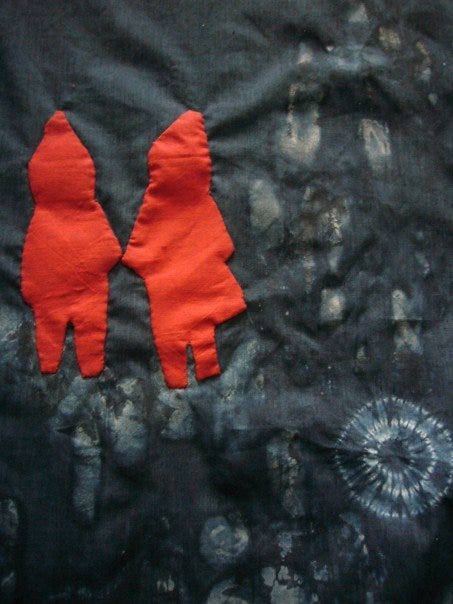
While I was back in Sausalito, I had the opportunity to visit the DeYoung Open and look at all the wonderful local Bay Area art work. Among many of the pieces was a couple of textile works. It was so lovely to see how there’s so much talent represented in the Bay Area… and so many talented people that have yet to show as well.
Some history…
For the record, I love textiles. My mother worked as a seamstress while I was growing up. She had to sew for a large factory, and they allowed her to work from home, while she watched us from her sewing machine in the basement. I honestly don’t know how that is possible, now that I have a child of my own, but that’s how we passed many summers and after-school afternoons. I remember the large heavy sacks of already pre-cut cloth that smelled of industrial sewing machine oil. And the pointy awls that sometimes me and my sister used to invert pieces after they had been run through the sewing machine. I wonder how much of our childhood was altered due to the work we did.
This familial experience obviously has had a huge bearing on my comfort with soft objects. These days, I collect textiles, and even though I love paintings and sculpture, and indeed I practice visual art, I don’t have the same innate intuition as I do with textiles. I feel safe when I am with textile art, whereas I am always in a state of feeling questioned/questioning when I am with other forms of creative expression.
It is with that safety that I’m genuinely curious about how something was made, how the hand could create such an object? What were the minuscule decisions that were made to culminate in a finished form? What specific tools were used, and had to be evolved to make the work? And lastly, how is this work entwined with family, heritage, and the work of women? Because textile work is always always so entwined in the work of women.
So many stories wrapped up in each piece.
When I’m making a knit piece, every loop and inch of yarn has to be handled. When the piece is complete, I know it intimately. I think of the thoughts that had been running through my head while I was knitting. I think of the conversations I may have had. I think of the circumstances surrounding when the piece was made.
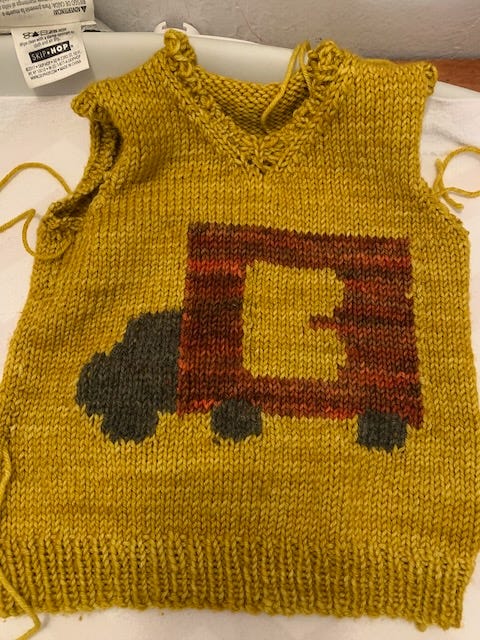
This got me thinking about how this amorphous softness of textiles can be better reflected in my own craft. I’ve noticed that when working with fiber, there is a tension in the process in which craftsmanship often gets in the way of being loose, which is often something I love so much about painting. The very act of paying attention to a chemical recipe (for a dye), or making sure your stitches are measuring right, or making sure that pieces fit together in a quilt, results in neatness.. it’s almost as if the finished product becomes too deliberate.. too put together.
Take Indonesian batiks, for instance; they are beautiful in their own right. The craftsmanship is undeniably halus (very fine), and I fully understand the work that went into the creation of a batik, however, they feel like adornments (which is probably what was intended by the craftsperson), rather than a conversation (which is what I want to achieve).
Some pieces I take inspiration from…
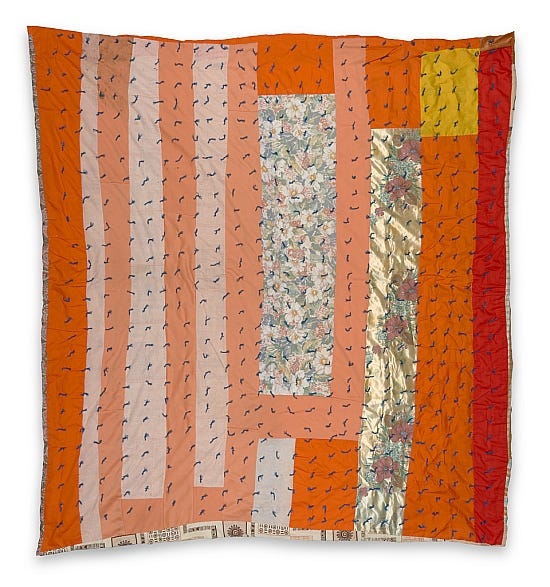
I think the closest I’ve seen in folk art where there is a freedom of conversation are some of the quilts from Gees Bend. There is so much looseness in the quilting, but done with such a self-assured hand. And at the same time, the amorphous softness of textile comes right through in the image. I feel safe.
I’m astounded at this “Bars” piece - the bright colors, and the simple usage of floral cutaways to bring it down a little. It really is something else, and I hope one day to see this piece in person.
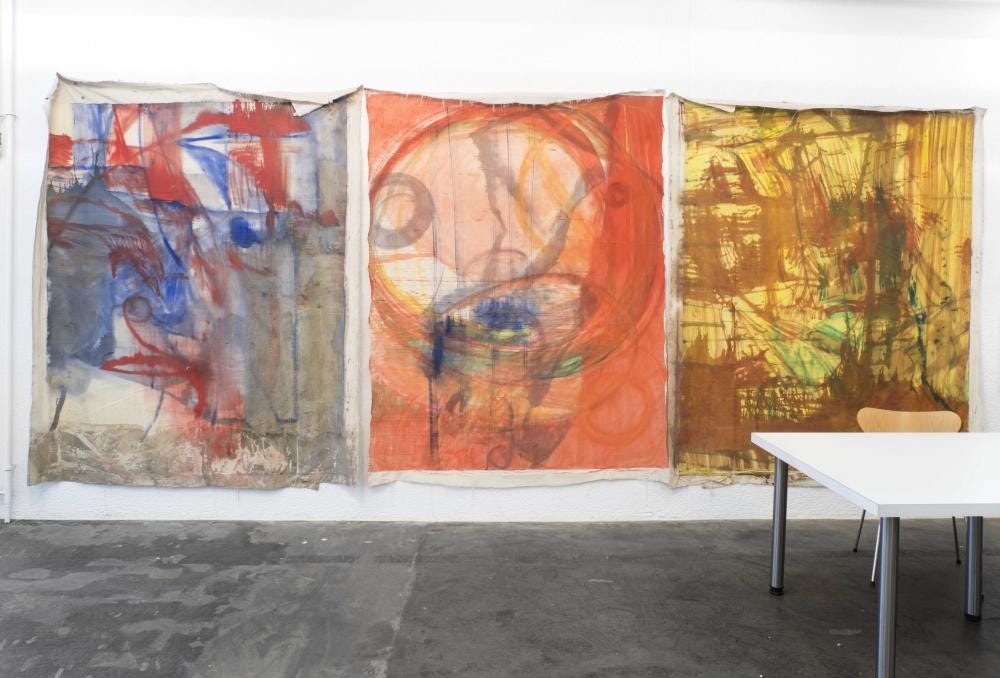
I also really love the directness of Vivian Suter’s textile pieces that layer upon themselves, and lend to a storybook effect within the installation. Talk about conversation with the viewer - you cannot help but be drawn into trying to decipher the story that is unfolding in front of you. I also appreciate the unfinished edges on her canvases - they add to the urgency of what she is trying to say.
And what I’m working on now…
Which brings me to a piece that I saw in the liminal moments between slumber and wakefulness. Currently, I’m experimenting with a silk dyed piece. Over the last few months I have been collecting avocado peels; I had taken a natural dye class at the Headlands years ago, and remembered that they could dye fabrics black with the proper mordant. I’m hoping that I could use this application on some of the unfinished silks I brought back to Malaysia with me. Drawing inspiration from how Vivian Suter1 hung her pieces, I think having the dyed Habotai silk hung up, especially playing off of tropical light and color, in addition to the feather-weight of the fabric, would be very special.
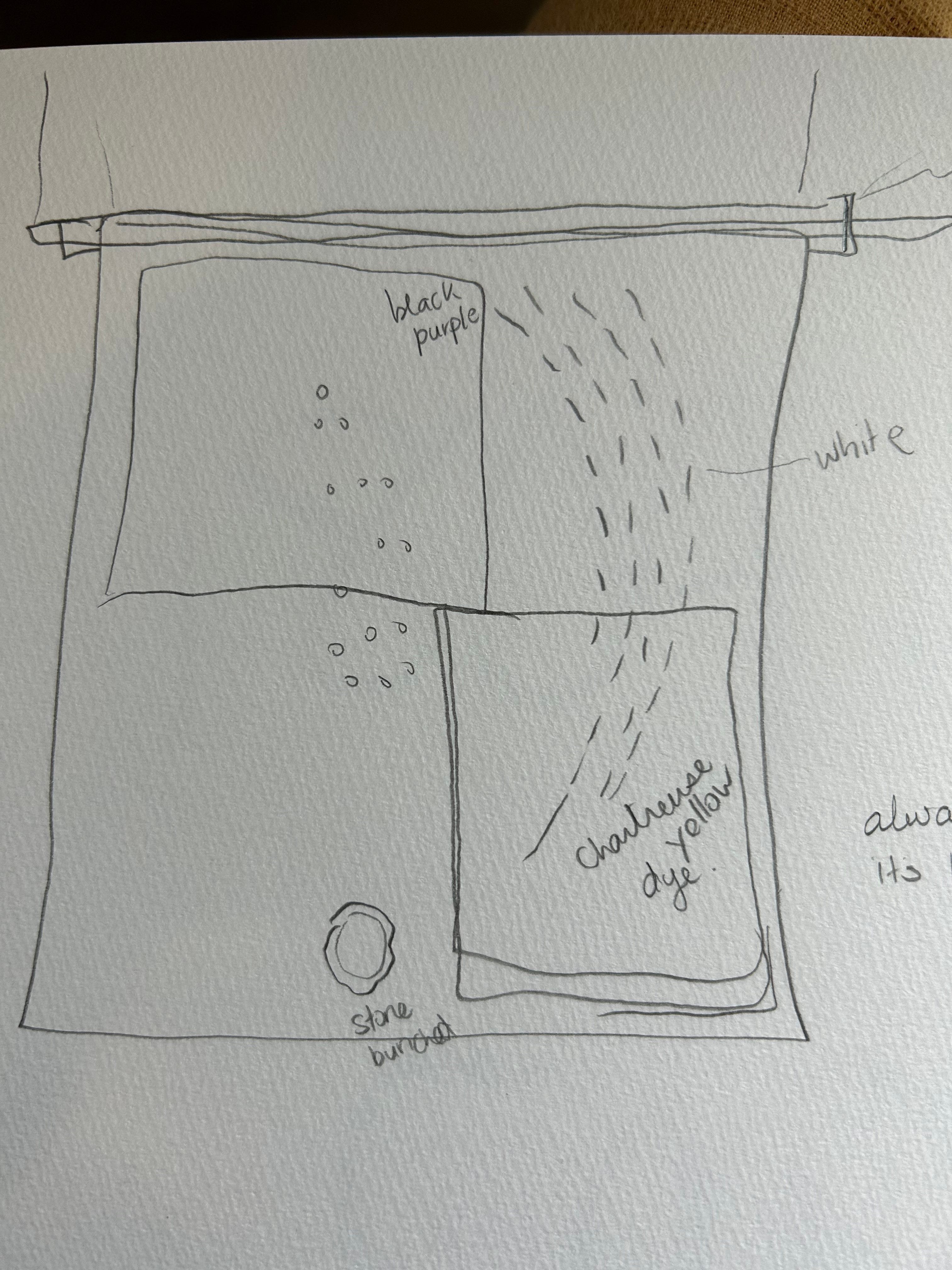
So here is a piece I am thinking about/working on right now. It will be a mixed textile piece that I will be dyeing with avocado skins, and something that produces chartreuse. I’m not sure yet. I’m not sure if I’m dyeing pieces and putting them together, or if it will be a single fabric and I will resist parts off with cassava paste or wax.
To be determined.
It’s good to be back in Malaysia. I miss my home in the Bay Area, but I’ve also missed my home here too. Thank you and have a good day!
https://www.nytimes.com/2019/04/17/t-magazine/vivian-suter.html